
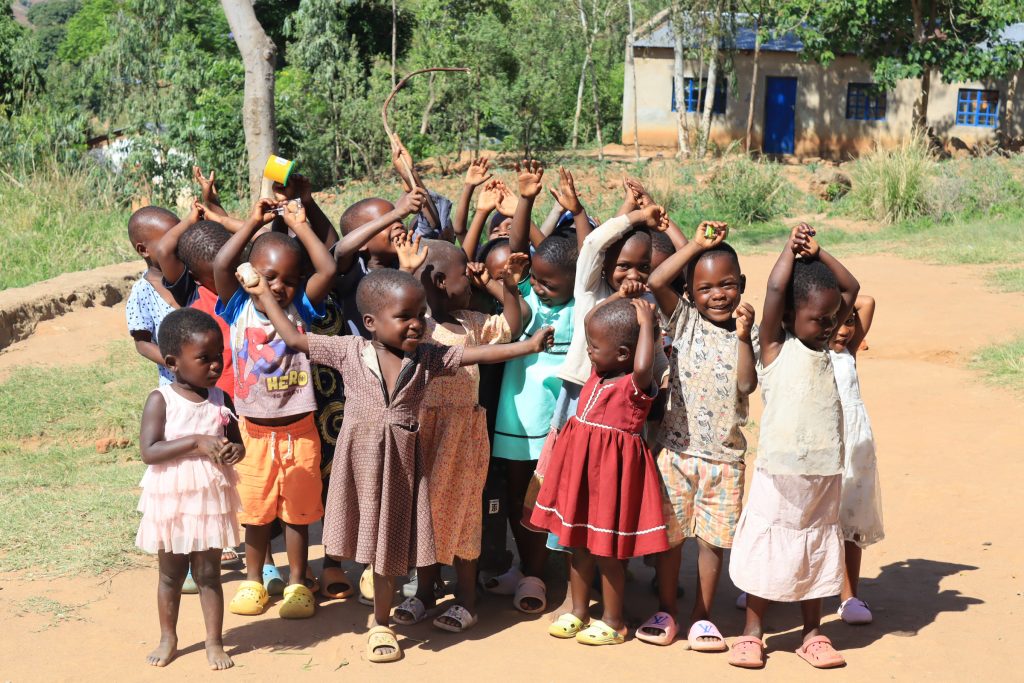
The Reckitt Global Hygiene Institute’s (RGHI) Early Childhood Development (ECD) project is a multi-phase study (2024–2026) aimed at generating evidence to inform the design of targeted hygiene interventions in Early Childhood Development Centres (ECDCs) in Blantyre District, Malawi. With funding from the RGHI, the project is being implemented in collaboration with the University of Strathclyde and the London School of Hygiene and Tropical Medicine (LSHTM).
The project focuses on three key hygiene behaviours:
Project Phases
Phase One: Rapid Assessment and Formative Study
Completed · 2024Phase One involved a mixed-methods cross-sectional study across 30 ECDCs, stratified across urban, semi-urban, and rural settings in Blantyre District. The study assessed WASH infrastructure against the 2022 National Minimum Standards, observed hygiene practices, and explored behavioural determinants through interviews with management staff, caregivers, and food handlers.
Poor practices were linked primarily to structural constraints — limited water and soap access, high child-to-caregiver ratios, lack of remuneration, and low awareness of national WASH standards — rather than motivation. These findings are reported in a manuscript currently under review.
Phase Two: Investigating Drinking Water Safety in ECDCs
Completed · 2025Building on Phase One, this study revisited the 30 ECDCs to investigate how drinking water becomes contaminated throughout a typical ECD day. The team collected water samples from sources, swabbed drinking water buckets and cups at the start and end of the day, and took end-of-day water samples from buckets.
The contamination pathways identified across Phases One and Two — including shared cups, infrequent cleaning of water containers with soap, child defecation in the yard, and absence of handwashing during food preparation — provided the evidence base for Phase Three.
Phase Three: Where Do Germs Hide? Tracing Contamination in ECDC Environments
Ongoing · Jun–Dec 2026To ensure the future intervention is precisely targeted, Phase Three is systematically mapping microbial contamination at critical control points during routine ECDC activities — food preparation, porridge feeding, and snack time. The study is being conducted in 15 ECDCs in Blantyre District, collecting approximately 840 samples from caregiver and learner hands, utensils, eating surfaces, and cleaning water.
Sampling will be done at two time points — the dry season (June 2026) and the wet season (November to December 2026) — to capture seasonal variation. Samples will be tested for enteric pathogens using molecular laboratory methods. The findings will directly inform the co-design of a context-specific, evidence-based hygiene intervention for ECDCs.
Expected Impact
- A robust, seasonally-informed map of microbial contamination pathways in ECDCs.
- An evidence base for the co-design of a targeted, context-specific hygiene intervention.
- Contribution to national dialogue on WASH standards in early childhood settings.